


We use cookies to deliver the best possible experience on our website. By continuing to use this site, or closing this box, you consent to our use of cookies.

Street Light
Filters
Sort by
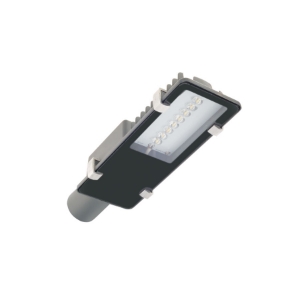
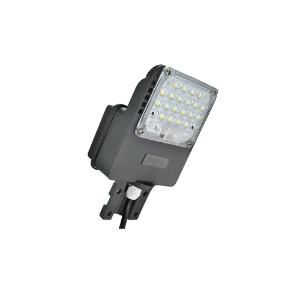
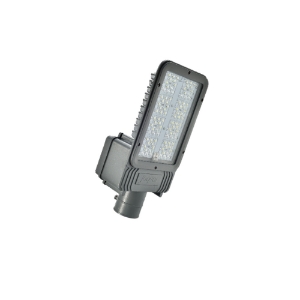
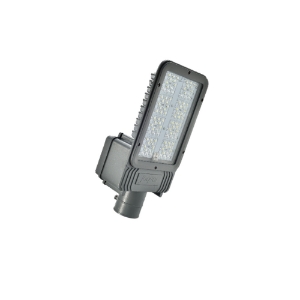
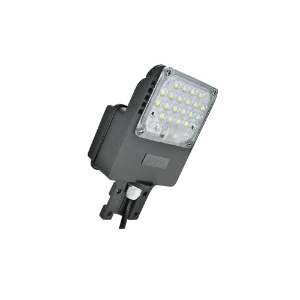
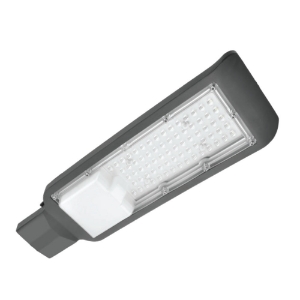
- Page 1 of 2 (9 total)
- 1
- 2
Street Lights
Roadway lighting includes high-performance street lights and highway lights engineered to deliver wide, uniform illumination over roads, pathways, and public spaces. Featuring energy-efficient LED technology, durable construction, and optimized beam distribution, these lighting solutions enhance visibility, safety, and comfort for drivers and pedestrians while reducing maintenance and operational costs.
At Jaquar, we illuminate pathways with precision and innovation. Our roadway lighting solutions are designed to enhance visibility and safety on streets and highways, marrying state-of-the-art technology with robust design. As a global leader in lighting and bathware solutions, Jaquar is dedicated to providing superior products that integrate seamlessly into urban and industrial landscapes.
Types of Roadway Lights
Jaquar offers a comprehensive range of LED roadway lighting options tailored to various needs:
- 01
Streetlights for Tunnel & Underpass
Perfect for tunnels and underpasses, these lights ensure safe and continuous illumination in enclosed roadway spaces.
- 02
Streetlights for Roads
Durable and powerful, these are ideal for illuminating open roadways and are commonly used for high mast lighting, enhancing both the aesthetics and functionality of public and private roads.
Roadway Lights By Jaquar
- PCR 25W LED Street Lights: This model features an asymmetric beam angle and a high colour rendering index, making it suitable for a variety of roadway applications.
- Top Opening LED Street Light (90W, 120W, 150W, 200W): With a top opening design, these lights are perfect for wide-area roadway lighting, offering multiple power configurations to meet diverse lighting needs.
- Energy-Efficient Street Light (60W, 72W): These are specifically designed to offer efficient lighting for streets and highways with a focus on energy efficiency and long-term durability.
Features
Our roadway lights are equipped with advanced features that set them apart:
- Aluminium die-cast housing with a resilient powder coating and a polycarbonate cover protects against various elements.
- IP65 and IP66 ratings ensure that our lights are dust-tight and can withstand heavy jets of water, making them suitable for all weather conditions.
- Surge and short circuit protection enhances reliability and safety.
Colour Finishes:
Jaquar’s roadway lights are available in a variety of colour finishes that not only enhance the aesthetic appeal but also increase the versatility of our products. You can choose from:
- Cool White: Provides a bright and clear light, ideal for enhancing visibility on roadways and highways.
- Warm White: Offers a softer light that creates a welcoming and comfortable atmosphere, suitable for residential areas and parkways.
- Neutral White: A balanced option that merges the benefits of cool and warm white, perfect for various outdoor and industrial applications.
Power Consumption Options
Jaquar’s roadway lights are available in multiple power options ranging from 25W to 200W. These energy-efficient models provide significant power savings while maintaining high luminous efficacy.
Street Lights: A Complete Guide to Outdoor Roadway Lighting Design
Street lighting plays an important role in how roads, pathways and public spaces function after dark. A well-planned lighting system helps road users recognise the route ahead, understand changes in the road layout and navigate intersections, entrances and pedestrian areas. It also contributes to the visual character of residential developments, commercial districts and larger infrastructure projects.
Choosing suitable street lights requires more than comparing wattage or selecting a fixture based on appearance. Road width, mounting height, pole spacing, beam distribution, surrounding buildings, environmental exposure and operating requirements all influence the final result.
Jaquar's Sri Lanka street-lighting collection includes LED roadway solutions with different power ratings, colour temperatures, mounting configurations and light distributions. These options can be assessed according to the requirements of the road or outdoor space, with the final specification based on product-level technical information and the project's lighting design.
1. Understanding the Purpose of Street Lighting
Street lighting provides artificial illumination for outdoor routes and shared spaces when natural light is insufficient. Its purpose is to make the road environment easier to interpret for drivers, cyclists, pedestrians and other users.
The lighting requirements of a road depend on how it is used. A residential street with slow-moving traffic has different needs from a highway carrying vehicles at higher speeds. A commercial street may also need to accommodate pedestrian crossings, parking areas, entrances and shopfronts.
A suitable lighting scheme considers the complete environment rather than the road surface alone. Nearby footpaths, junctions, medians, access roads and changes in elevation can all influence where illumination is required.
The main objectives of a street-lighting plan include:
- Providing appropriate illumination across the intended road area.
- Supporting visibility of the route, intersections and road edges.
- Limiting glare and distracting brightness.
- Maintaining reasonable consistency between adjacent illuminated areas.
- Selecting fixtures suitable for the outdoor environment.
- Managing energy consumption and maintenance requirements.
Street lighting should be designed according to applicable local standards and the characteristics of the site. Simply increasing the number of fixtures or selecting higher-wattage models does not necessarily improve the result.
2. Select Street Lights According to the Road Type
Different road environments require different lighting approaches. The intended use of the route should be established before deciding on the fixture, mounting arrangement or pole layout.
Residential roads
Residential roads generally serve local traffic, property entrances and pedestrian movement. Lighting should support route visibility while remaining appropriate for nearby homes and outdoor living areas.
The layout should consider driveways, footpaths, intersections and areas where pedestrians cross the road. Fixture placement should also avoid directing unnecessary light towards bedroom windows or neighbouring properties.
Main roads and highways
Main roads and highways may require illumination across wider carriageways and more complex layouts. The specification should reflect traffic speed, road geometry, the number of lanes, junction arrangements and applicable road-lighting standards.
Higher mounting positions and carefully selected optics may be used in some roadway designs, but the required configuration must be established through lighting calculations rather than a general rule.
Commercial streets
Commercial streets often combine vehicle movement with pedestrian activity, parking and access to buildings. The lighting plan should distinguish the road from adjacent pedestrian areas while maintaining visual continuity.
Supplementary fixtures may be required for entrances, pedestrian routes or landscaped spaces. These should complement the primary roadway lighting rather than produce competing pools of brightness.
Internal roads in residential developments
Internal roads within housing developments, campuses and private properties often require a coordinated approach to vehicle routes, pedestrian paths, landscaped areas and entrances.
Street lights can provide the main layer of roadway illumination, while other outdoor fixtures can address areas with different lighting requirements.
Tunnels and underpasses
Tunnels and underpasses have different lighting conditions from open roads because daylight availability changes along the route. Their lighting design must account for transitions between exterior and interior brightness, visibility through the space and the applicable tunnel-lighting requirements.
Jaquar identifies tunnels and underpasses as applications within its roadway lighting range. Project teams should confirm the suitability of each selected fixture for the specific tunnel environment and the relevant technical standards.
3. Choose the Appropriate Wattage and Light Output
Wattage is an important specification, but it should not be the only basis for selecting a street light. Wattage indicates electrical power consumption, while lumen output describes the quantity of light emitted by the fixture.
Two fixtures with similar wattage can produce different amounts of light or distribute it differently across the road. The optical design, mounting height and beam pattern also affect the illumination reaching the road surface.
Jaquar's street-lighting category lists power options ranging from 10W to 200W across its product filters, with specific models available in different configurations. The suitable output depends on the application and the technical characteristics of the chosen model.
When comparing street lights, assess:
- Wattage: The fixture's electrical power requirement.
- Lumen output: The total light emitted by the fixture.
- Optical distribution: How the light is directed across the road.
- Mounting height: The distance between the fixture and the surface being illuminated.
- Pole spacing: The distance between successive lighting positions.
- Road dimensions: The width and geometry of the area requiring illumination.
- Operating conditions: The expected usage pattern and maintenance requirements.
A higher-wattage fixture may be appropriate for a demanding application, but it can also produce unnecessary brightness if selected without considering the road layout.
For infrastructure projects, a lighting designer should determine the required fixture output and spacing using the applicable standards and a suitable lighting calculation.
4. Understand Beam Distribution and Asymmetric Lighting
Light distribution determines where the light travels after leaving the fixture. This is particularly important in roadway applications because the objective is to illuminate the intended road area rather than simply create brightness around the pole.
A poorly matched distribution can produce bright areas directly beneath the fixtures while leaving gaps between them. It may also direct light towards surrounding buildings or other areas where it is not needed.
Asymmetric beam distribution is designed to direct light preferentially in a particular direction. This can be useful in roadway layouts where illumination needs to extend across the carriageway.
Jaquar's street-lighting range includes products with asymmetric beam options, while other listed models have different optical configurations. The appropriate distribution should be verified against the selected model's technical documentation.
The lighting plan should account for:
- The width of the road.
- The position of the pole relative to the carriageway.
- The distance between adjacent poles.
- The number of lanes and the presence of a median.
- The mounting height and orientation of each fixture.
- The location of pedestrian areas and neighbouring buildings.
A suitable beam pattern can help distribute light where it is needed, but it cannot compensate for an unsuitable mounting arrangement. Both fixture selection and layout should be evaluated together.
5. Plan Pole Height, Position and Spacing
Pole placement influences the coverage, uniformity and visual appearance of street lighting. The correct arrangement depends on the road geometry and the optical performance of the selected fixture.
If poles are too far apart for the selected output and distribution, the road may contain poorly illuminated gaps. If they are placed too close together, the installation may use more fixtures and consume more energy than necessary.
Pole height also changes how the light reaches the road. A higher mounting position can spread the light over a larger area, depending on the optical design, but it can also reduce the illumination reaching a particular point. The actual outcome should be established through photometric calculations.
Common layout considerations include:
Single-sided arrangement: Poles are positioned along one side of the road. This may suit some narrower road layouts, subject to the required illumination and uniformity.
Opposite-side arrangement: Poles are placed on both sides of the road, often in a coordinated pattern. This can be considered for wider routes or layouts where lighting is required across multiple lanes.
Staggered arrangement: Fixtures alternate between the two sides of the road. Its suitability depends on road width, pole spacing and the selected optical distribution.
Central or median arrangement: Where the road layout permits it, lighting may be positioned along a central median. Structural clearances, access, traffic conditions and maintenance requirements must be evaluated.
These are planning concepts, not universal recommendations. A qualified lighting designer should determine the final configuration using the actual road dimensions, fixture data and relevant standards.
6. Select a Suitable Colour Temperature
Colour temperature affects the visual appearance of street lighting. It is measured in kelvin (K), with lower values generally appearing warmer and higher values appearing cooler.
Jaquar's street-lighting category lists colour temperature options including 3000K, 5700K and 6500K, depending on the model.
3000K warm white produces a warmer appearance and may suit selected residential streets, parkways or settings where a softer visual character is preferred, provided the required illumination performance is achieved.
5700K provides a cooler, neutral-to-daylight-like appearance, depending on the source and viewing conditions. It may be considered for roadway applications where this visual character aligns with the project's requirements.
6500K cool white appears cooler and more daylight-like. Its suitability should be evaluated in relation to the road environment, surrounding lighting and applicable design criteria.
Colour temperature alone does not determine visibility, colour rendering or lighting quality. The fixture's output, optics and the visual tasks performed by road users must also be considered.
Consistency across the installation is important. Using noticeably different colour temperatures along the same route can create an uneven visual appearance unless the differences are deliberate and appropriate to the design.
For larger developments, the selected colour temperature should be documented in the lighting specification so that replacement fixtures and future extensions can be coordinated with the existing installation.
7. Understand Outdoor Protection Ratings
Street lights operate in environments where fixtures may be exposed to rain, dust, humidity and changing temperatures. Product suitability therefore depends partly on the protection rating and construction of the selected model.
Jaquar's street-lighting category includes IP65 and IP66-rated products. These ratings indicate levels of protection against dust and water ingress under specified test conditions.
An IP65 rating indicates dust-tight construction and protection against water jets under the relevant test conditions. IP66 provides dust-tight protection and protection against more powerful water jets. Neither rating alone establishes suitability for every environmental condition or installation scenario.
Other factors, including corrosion exposure, temperature limits, mounting orientation and the manufacturer's installation requirements, should also be checked.
For street-lighting projects in Sri Lanka, the site assessment may need to consider seasonal rainfall, humidity, dust, coastal exposure and nearby vegetation. The relevance of each factor depends on the exact location.
Before specifying a fixture, review:
- The product's IP rating.
- The stated operating temperature range.
- The suitability of the housing and finish for the environment.
- The installation orientation and cable-entry requirements.
- The electrical protection requirements.
- The manufacturer's instructions for inspection and maintenance.
Do not assume that every model in a product category has identical environmental protection. Confirm the technical details of the exact fixture being specified.
8. Consider Housing Materials and Construction
The construction of a street light influences its suitability for long-term outdoor use. Housing materials, surface finishes, covers and sealing arrangements should be considered alongside the electrical and optical specifications.
Jaquar describes aluminium die-cast housing, protective powder-coated finishes and polycarbonate covers among the construction features of its roadway lighting range. The exact construction should be verified for the selected model.
Aluminium housings can provide a structured enclosure for the lighting components and support heat management, depending on the design. A protective finish helps address the conditions for which the product has been specified.
Covers protect internal components while allowing light to pass through. Their design and material can influence durability, optical performance and maintenance requirements.
For sites with demanding environmental conditions, the project team should also review the manufacturer's information on corrosion exposure, cleaning, operating temperature and mounting restrictions.
The fixture's overall suitability depends on the complete construction rather than one material alone. Correct installation and routine inspection remain important even when a product is designed for outdoor use.
9. Reduce Glare and Unwanted Light Spill
Street lighting should illuminate the intended route without creating unnecessary glare or sending excessive light into surrounding areas.
Glare can occur when a bright source or illuminated area creates visual discomfort or makes it harder to see other details. Its effect depends on factors such as brightness, viewing angle, contrast and the observer's position.
Unwanted light spill can affect nearby homes, gardens, building facades and natural surroundings. It may also make the lighting scheme appear brighter than necessary without improving the illumination of the road.
Several design decisions can help manage these issues:
- Select optics appropriate for the road width and layout.
- Position fixtures so that the intended road area receives the light.
- Review mounting angles and fixture orientation.
- Avoid unnecessary illumination of windows and adjacent properties.
- Assess the relationship between street lighting and nearby decorative lighting.
- Use suitable lighting calculations to evaluate uniformity and spill.
The aim is not to eliminate all visible light outside the carriageway, but to ensure that the distribution is appropriate for the project.
For residential and mixed-use environments, it is particularly important to consider the experience of people living or working near the road. A technically bright installation can still be poorly designed if it creates avoidable glare or intrusion.
10. Street Lighting for Residential Developments
Residential developments need outdoor lighting that supports movement while remaining visually appropriate for the surrounding homes and landscape.
Internal roads, entrances, parking areas and pedestrian routes may require different fixture arrangements. The lighting plan should distinguish these uses instead of treating the entire development as one uniform space.
Street lights can provide the main layer for internal roads. Separate fixtures may be needed near entrances, landscaped paths or shared outdoor facilities.
The design should account for:
- The width and layout of internal roads.
- Vehicle movement and pedestrian crossing points.
- Access to homes and shared facilities.
- Nearby windows and outdoor seating areas.
- Trees, planting and other landscape features.
- Maintenance access for poles and electrical equipment.
Colour temperature and fixture appearance also influence how the development looks after dark. Consistency can help create a coordinated visual identity, while targeted accent lighting may be used in selected communal areas.
For these projects, the objective is to provide the required road illumination without making the entire development unnecessarily bright. The final specification should reflect the actual site plan and relevant local requirements.
11. Street Lights for Commercial Areas and Parking Facilities
Commercial environments often combine roadways, parking spaces, loading areas, entrances and pedestrian movement. Each of these areas may have different lighting requirements.
A street light designed for a road should not automatically be assumed to provide suitable illumination for a parking bay, building entrance or loading zone. The fixture's distribution and mounting arrangement must be appropriate for the intended surface.
For parking areas, the layout should consider vehicle circulation, pedestrian routes, accessible parking spaces and the positions of entrances and exits.
For commercial streets, lighting should help define the roadway while coordinating with shopfronts, signage and adjacent outdoor areas. Strong decorative lighting should not compete with the illumination needed for the road.
Loading and service areas may require a separate lighting assessment according to the activities performed and the applicable workplace requirements.
In large commercial developments, a coordinated plan can reduce visual inconsistency between different outdoor zones. It can also simplify procurement and maintenance by establishing clear fixture specifications for each application.
12. Street Lighting for Industrial and Institutional Sites
Industrial facilities, campuses, hospitals and large institutions may contain extensive internal road networks. These environments often require lighting for vehicle routes, pedestrian access, service roads and entrances.
The design should begin with a site plan identifying the different circulation routes and areas where illumination is needed. Traffic movement, operating hours, security arrangements and maintenance access may all influence the final specification.
Industrial sites may also contain loading areas, yards and workspaces that require different lighting from the internal roads. These should be assessed separately rather than relying on roadway fixtures to meet every requirement.
Jaquar's wider range includes industrial lighting, which can be evaluated for appropriate industrial applications alongside street lights for the site's road network.
For institutional campuses, the design should consider both vehicle movement and pedestrian connections between buildings. Entrances, intersections, crossings and changes in road direction should be incorporated into the lighting plan.
The final system should meet the relevant project standards and be supported by suitable installation documentation.
13. Coordinate Street Lighting with Landscape and Outdoor Lighting
Street lights form one layer of a wider outdoor lighting scheme. Other fixtures may be needed to illuminate pedestrian paths, landscape features, entrances and building edges.
Jaquar's Sri Lanka outdoor portfolio includes categories such as garden lighting and ground recessed lighting, which may be considered for suitable landscape and architectural applications.
Each category serves a different purpose. Street lights provide roadway illumination, while garden and ground-recessed fixtures can contribute to selected landscape or architectural areas where their specifications are appropriate.
A coordinated plan should establish a visual hierarchy. The main road should remain legible, while decorative lighting supports the surrounding environment without distracting from essential routes.
For example, a residential development may use street lights along internal roads, low-level lighting along selected pedestrian paths and accent fixtures near landscaped features. The exact combination depends on the site design and the requirements of each area.
Avoid using decorative fixtures as substitutes for properly designed roadway lighting. The light output, distribution and environmental protection of each product must suit its intended function.
14. Understand Energy Consumption and Operating Costs
Energy use is an important consideration for installations that operate for several hours each night. The total consumption depends on the wattage of each fixture, the number of installed units and the operating schedule.
To estimate energy consumption, multiply the combined fixture wattage by the number of operating hours and divide by 1,000. The result is the energy used in kilowatt-hours (kWh).
For example, a hypothetical installation of 20 fixtures rated at 100W each has a combined connected load of 2,000W, or 2kW. If all fixtures operate for 10 hours, the estimated consumption is 20kWh for that operating period, excluding any additional system loads.
This is an illustrative calculation rather than a recommendation to use 100W fixtures. Actual consumption should be calculated using the specifications of the selected model and the intended operating schedule.
When assessing energy use, consider:
- The required illumination and distribution.
- The wattage and light output of the selected fixture.
- The number of fixtures in the layout.
- The operating hours throughout the year.
- The potential for suitable lighting controls.
- Maintenance and replacement requirements.
A lower-wattage fixture is not necessarily the more efficient choice if it cannot deliver the required illumination and additional fixtures must be installed. Compare the performance of the complete proposed system rather than wattage alone.
15. Consider Controls and Smart Lighting
Lighting controls can help manage operating schedules and adjust how outdoor lighting is used. Depending on the project, controls may include timers, photocells, dimming systems or compatible smart lighting infrastructure.
Photocells can respond to ambient light conditions, while timers operate according to a defined schedule. More advanced systems may support monitoring or remote management where the relevant control infrastructure is installed.
Jaquar's street-lighting category notes the potential for integration with smart-city technologies. However, the actual control options depend on the selected fixture and compatible equipment.
Before specifying a control system, confirm:
- Whether the fixture supports the intended control method.
- Whether additional drivers, sensors or interfaces are required.
- The electrical compatibility of the system.
- How operating schedules will be established.
- What happens if a control component fails.
- Whether the system requires ongoing monitoring or software support.
Controls should not compromise the required lighting levels or the operation of any safety-critical areas. If dimming is proposed, the designer should establish which operating conditions permit reduced output and how the system will respond to different circumstances.
The control strategy should be documented as part of the project specification so that the installation can be operated and maintained consistently.
16. Maintenance Planning for Street Lighting
Street lights are often installed at heights that make access more complex than for indoor fixtures. Maintenance requirements should therefore be considered during product selection and layout design.
A maintenance plan should identify how fixtures will be inspected, how faults will be reported and how replacement components will be sourced. For large installations, keeping an inventory of installed models and technical documentation can simplify future servicing.
Routine inspections may include checking for visible damage, loose components, water ingress, unusual discolouration or failures in the lighting output. The inspection schedule should reflect the operating environment and manufacturer's recommendations.
Vegetation also requires attention. Trees that grow near poles may eventually obstruct the light distribution or create shadows across the road. The layout should account for existing planting and the likely growth of nearby vegetation.
For coastal or otherwise demanding environments, the maintenance plan should also consider the condition of protective finishes and exposed components, following the manufacturer's guidance.
Any electrical inspection, repair or replacement work should be performed by qualified personnel using appropriate safety procedures. The pole and electrical supply must be made safe before servicing.
A documented maintenance process helps keep the installation consistent over time and supports more predictable operating costs.
17. Common Street Lighting Design Mistakes
Several avoidable mistakes can reduce the effectiveness of an otherwise suitable street-lighting installation.
Choosing wattage without a lighting calculation: A fixture's wattage does not establish whether it will illuminate the road adequately. Consider lumen output, optics, mounting height and spacing.
Using the same arrangement for every road: Residential streets, highways, parking areas and pedestrian zones have different requirements. The design should reflect the actual application.
Ignoring glare: A bright fixture can create discomfort if it is poorly aimed or positioned. Review the distribution from the perspective of road users and nearby properties.
Overlooking environmental exposure: Confirm that the product's IP rating and construction are suitable for the actual installation conditions.
Ignoring vegetation and nearby structures: Trees, signs and buildings may obstruct the light or alter the distribution over time.
Selecting incompatible control equipment: Verify the compatibility of fixtures, drivers, sensors and control systems before procurement.
Neglecting maintenance access: The layout should allow inspection and servicing to be performed safely and practically.
Treating decorative lighting as roadway lighting: Decorative fixtures may not meet the distribution or performance requirements of a road.
Failing to document the specification: Product references, mounting details and control arrangements should be retained for installation, maintenance and future extensions.
Avoiding these mistakes begins with a clear project brief, reliable product data and coordination between the lighting designer, electrical contractor and other project stakeholders.
18. A Practical Checklist for Selecting Street Lights
Before finalising a street-lighting specification, review the following points.
Site and application
- Identify the type of road and its intended use.
- Record the road width, lane arrangement and key intersections.
- Identify pedestrian routes, entrances and neighbouring properties.
- Assess environmental exposure and surrounding vegetation.
Fixture performance
- Review wattage and lumen output.
- Select a suitable beam distribution.
- Confirm the colour temperature and colour-rendering requirements.
- Verify the mounting configuration and product dimensions.
- Check the IP rating and environmental limitations.
Layout and installation
- Establish the proposed pole positions and mounting heights.
- Calculate the appropriate fixture spacing.
- Assess glare, uniformity and unwanted light spill.
- Confirm the pole, bracket and electrical requirements.
- Arrange professional installation and testing.
Operation and maintenance
- Estimate energy consumption from the actual connected load.
- Determine whether compatible lighting controls are required.
- Establish an inspection and maintenance schedule.
- Retain product documentation and replacement references.
- Confirm that the design meets applicable local standards.
This checklist provides a starting point for coordinating the technical and practical aspects of a street-lighting project. The final specification should be based on the site's measured conditions and the requirements of the relevant authorities.
Plan Outdoor Roadway Lighting with Jaquar
Effective street lighting depends on the relationship between the fixture, its optical distribution, the mounting arrangement and the environment in which it operates. Selecting a product based on wattage or appearance alone may overlook important requirements such as road coverage, glare control, outdoor protection and maintenance access.
Jaquar's Sri Lanka street-lighting range includes roadway solutions with different power ratings, colour temperatures, beam distributions and outdoor protection specifications. Reviewing the technical details of each model helps identify options appropriate for the intended application.
For projects involving multiple outdoor zones, street lights can be considered alongside industrial lighting, garden lighting and ground recessed lights. These categories can serve complementary roles within a coordinated outdoor lighting plan, provided each fixture is specified for its intended use.
By defining the lighting requirements early, calculating the layout carefully and confirming product compatibility before installation, project teams can create roadway lighting schemes that balance visibility, energy use, environmental suitability and long-term maintenance.
Why Choose Jaquar?
- Finishes: Our lights are not only functional but also aesthetically pleasing, designed to enhance the urban landscape.
- Unmatched Warranty: We offer up to a 10-year warranty, reflecting our confidence in our products’ longevity and performance.
- Longer Life: With an LED lifespan exceeding 50,000 hours, our lights ensure continuous operation without frequent replacements.
- Jaquar Care: Our commitment to customer satisfaction is demonstrated through exceptional after-sales service and support.
FAQs:
Q. Are LED roadway lights suitable for all weather conditions?A. Yes, our LED roadway lights are designed with high IP ratings to withstand various weather conditions effectively.
Q. Can LED roadway lights be integrated with smart city technologies?
A. Yes, our roadway lights can be integrated with smart technology systems to enhance urban efficiency and safety.
Q. Can roadway lights be customised for specific road conditions?
A. Yes, we offer customisation options to tailor lighting solutions to specific roadway and area requirements.
Q. Can LED roadway lights be used in areas with high humidity or salt exposure?
A. Yes, our lights are built with corrosion-resistant materials, making them ideal for humid or saline environments.
Q. Are there solar-powered options for roadway street lights?
A. Yes, Jaquar provides solar-powered lighting solutions for roadway street lights, such as street pole lights, that align with our commitment to sustainability and energy efficiency.